



And right now, that erosion is happening faster than most teams expected. Across healthcare foodservice, operators are being pushed to deliver higher-quality dining experiences while still managing tight budgets, staffing challenges, and growing operational complexity. Food has become a bigger part of the overall care experience, with two-thirds of patients and residents saying it directly impacts their satisfaction.
So where does the pressure show up?
Not always where you think.
A few cents here. A missed rebate there. A contract that isn’t being fully used. Before long, those small gaps start adding up to something much bigger.
Most teams aren’t overspending on purpose. The real issue is simpler than that.
They just don’t have the full picture.
It’s Not Pricing. It’s What You Can’t See.
It’s easy to assume higher costs come down to rising prices. And yes, markets shift. Vendors adjust. That part is real.
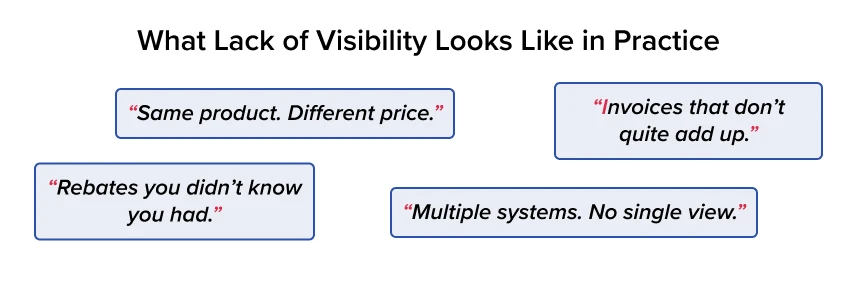
But in many cases, the bigger issue is what’s happening behind the scenes.
- Purchasing data lives in different systems
- Departments order independently
- Pricing varies more than expected across vendors
- Rebates and contracts go underutilized
When everything is fragmented, it becomes nearly impossible to see where money is slipping through the cracks.
And if you can’t see it, you can’t fix it.
The Most Common Places Costs Get Lost
These aren’t always obvious. In fact, most of them look like normal day-to-day operations.
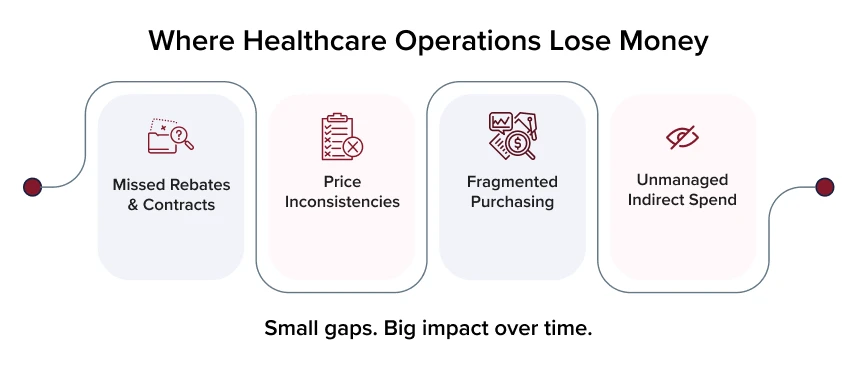
1. Missed Rebates and Contract Opportunities
You might already have access to better pricing or rebates. The challenge is actually using them.
- Contracts aren’t always aligned with what’s being purchased
- Teams may not know which items are eligible
- Reporting isn’t clear or consistent
The result? Savings exist on paper but never show up in practice.
2. Price Inconsistencies Across Vendors
Two locations. Same product. Different price.
It happens more often than most operators expect.
Without a clear way to track pricing across distributors, it’s easy to:
- Pay more than you should
- Miss discrepancies
- Lose negotiating leverage
And those small differences add up quickly over time.
3. Fragmented Purchasing Across Locations or Departments
When teams operate independently, consistency disappears.
- Different products for the same use
- Different suppliers for the same category
- No standardized approach to purchasing
This doesn’t just impact cost. It creates inefficiencies across the entire operation.
4. Indirect and Ancillary Spend That Flies Under the Radar
Food gets the attention. Everything else often doesn’t. But indirect spend categories like linens, uniforms, waste management, and facility services can quietly drain budgets when they aren’t actively managed. Exploring broader foodservice procurement solutions can help healthcare operators gain more control over these overlooked expenses and strengthen their ancillary program strategies.
But categories like:
- Linens
- Facility supplies
- Uniforms
- Waste management
- Maintenance services
…can quietly drain budgets when they aren’t actively managed.
Why This Happens More Often in Non-Acute Healthcare
Non-acute healthcare facilities are juggling a lot.
- Tight, fixed budgets
- Lean teams
- High expectations for quality and consistency
- Multiple vendors and purchasing categories
There isn’t always time to dig into data or track down every discrepancy.
So, teams do what they need to do to keep things running.
The downside is that inefficiencies become part of the routine, making healthcare cost management even more difficult over time.
What Better Visibility Actually Looks Like
Fixing this doesn’t mean overhauling everything overnight.
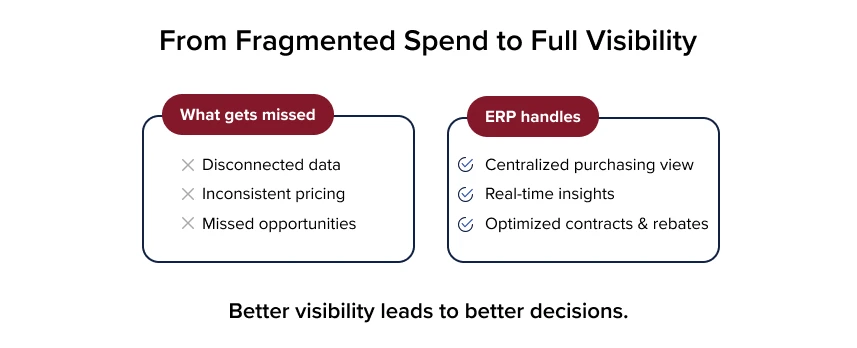
Effective healthcare cost management starts with being able to see what’s really happening across your spend.
Here’s what that looks like in practice:
A Clear View Across All Purchasing
- Food and non-food categories in one place
- Consistent reporting across locations
- Real-time insights instead of delayed data
Contract and Rebate Tracking That Works
- Visibility into what’s being used and what’s not
- Alerts for missed opportunities
- Easy access to eligible programs
Pricing Transparency Across Vendors
- Side-by-side comparisons
- Identification of discrepancies
- Better data to support negotiations
Turning Data Into Action (Without Adding More Work)
Having data is one thing. Acting on it is another.
That’s where a lot of teams get stuck.
The real advantage comes from tools and support that do the heavy lifting for you.
- AI-driven analysis that flags savings opportunities automatically
- Centralized dashboards that simplify decision-making
- Ongoing support to help implement changes
Instead of chasing down issues manually, you’re able to focus on the decisions that actually move the needle.
What This Means for Your Operation
When healthcare cost management is backed by full operational visibility, a few things start to change.
- You catch pricing issues faster
- You make better use of contracts and rebates
- You bring more consistency across locations
- You reduce unnecessary spend without cutting quality
It’s not about making drastic changes.
It’s about tightening the gaps that are already there.
You’re Not Overspending. You’re Missing the Full Picture.
Most non-acute healthcare teams are doing the best they can with the information they have.
The challenge is that the information is often incomplete.
Once you can see your full spend clearly, the opportunities become a lot easier to act on.
And that’s where real savings start to show up.
Get a clearer view of your spend and uncover savings you might be missing. Click here to connect with Prime Services today.
FAQs
Why is it so hard to see where money is going in healthcare operations?
Honestly, it usually comes down to how spread out everything is. Different departments order differently, vendors use their own systems, and reports don’t always line up. You end up with pieces of the story instead of the full picture, which makes it tough to spot where costs are slipping.
What are some costs operators tend to overlook?
It’s not always the obvious stuff. Sure, food costs get attention, but things like missed rebates, small price differences between vendors, or even supplies like linens and services can quietly add up. Nothing jumps out on its own, but together it can make a real dent.
What’s one simple way to start improving cost visibility?
Start by pulling your purchasing data into one place. Even if it’s not perfect, having everything side by side helps you notice patterns you wouldn’t catch otherwise. From there, it becomes a lot easier to see where things feel off.
Are rebates really worth paying attention to?
They are, but only if you’re actually using them. A lot of teams technically have access to rebates, but they’re not always tracking them or aligning purchases to take advantage of them. That’s where money tends to get left behind.
How does technology actually help without adding more work?
The right setup should do the digging for you. Instead of manually checking invoices or pricing, it flags issues, shows trends, and highlights opportunities. So, you’re not adding more to your plate; you’re just making better decisions with less guesswork.