



Ask most healthcare operators where the pressure is coming from right now, and you’ll hear the same answers on repeat: staffing shortages, rising costs, tighter reimbursement, higher expectations from residents and families. All true.
But here’s what doesn’t always get the same attention.
The everyday programs that keep facilities running. The non-clinical essentials. The things that quietly support care delivery without ever making headlines.
That’s where Ancillary Program Solutions come in, and it’s exactly why more healthcare organizations are taking a closer look at how these programs are managed, often by implementing a smarter healthcare procurement strategy.
The Quiet Costs That Add Up
Ancillary programs often live in the background. They’re spread across departments, vendors, and contracts that may have been set up years ago. Over time, those programs can become fragmented, outdated, or misaligned with how an organization operates today.

What does that look like in real life?
- Multiple vendors supplying similar products at different prices
- Contracts that haven’t been reviewed in years
- Staff spending time managing programs instead of focusing on care
- Little visibility into whether pricing is still competitive
None of these issues feel urgent on their own. But together, they create inefficiencies that impact both budgets and operations.
That’s why healthcare operators are rethinking Ancillary Program Solutions now, not later.
What Ancillary Program Solutions Really Mean in Healthcare
At their core, Ancillary Program Solutions are about supporting care without complicating it.
They include the programs and products healthcare organizations rely on every day but don’t always have the time or resources to manage closely. This can include pharmacy-related programs, medical supplies, facility services, and other operational essentials.
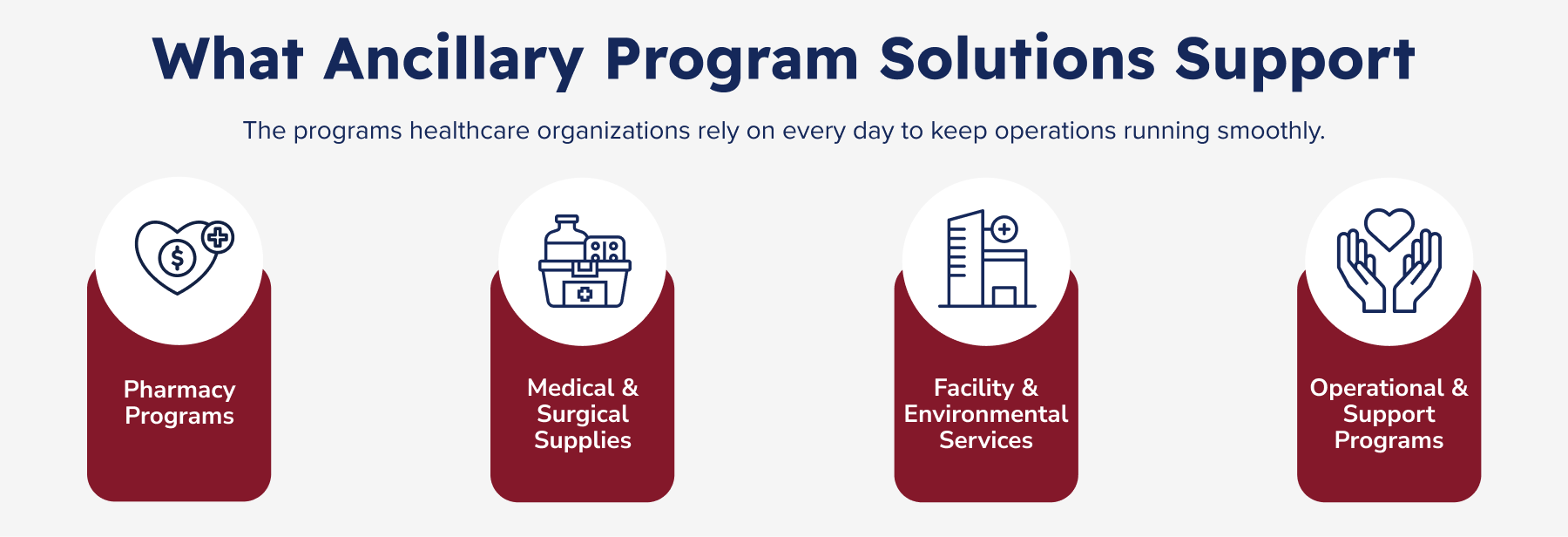
When managed intentionally, ancillary programs help create consistency across facilities, improve pricing stability, and reduce administrative burden. When managed passively, they tend to drift.
Why Operators Are Taking a Fresh Look
Rising Costs Leave No Room for Guesswork
Healthcare budgets are under constant strain. When costs increase across the board, even small inefficiencies start to matter more.
Operators are realizing that Ancillary Program Solutions can’t be “set it and forget it.” Pricing needs to be reviewed. Programs need to be evaluated. And decisions need to be based on current data, not assumptions made years ago.
Too Many Vendors, Not Enough Visibility
It’s not uncommon for healthcare organizations to work with dozens of suppliers across different categories. Without a centralized approach, that leads to inconsistent pricing, overlapping services, and unnecessary complexity. A digital procurement network can simplify vendors, surface rebates automatically, and give you visibility across indirect categories.
Rethinking ancillary programs often means simplifying. Fewer vendors. Clear contracts. Better oversight. Less time spent chasing answers.
Pharmacy Programs Deserve More Attention
Pharmacy operations are a major focus for many healthcare organizations, and for good reason. They directly impact patient outcomes, regulatory compliance, and overall cost control.
That’s why pharmacy-focused Ancillary Program Solutions, including pricing reviews and operational evaluations, are becoming a priority. Operators want confidence that their pharmacy programs are aligned with both financial goals and quality standards.
Quality Still Comes First
Cost matters, but not at the expense of care.
Healthcare operators know there’s no such thing as an easy fix. If a program cuts corners, staff feel it immediately. Supplies don’t show up. Products don’t perform. Care slows down.
What they want are programs they can trust. Brands they recognize. Suppliers who show up. Products that work the way caregivers expect them to, shift after shift.
When ancillary programs are built the right way, they fade into the background. Teams aren’t chasing issues, residents aren’t impacted, and care can stay front and center where it belongs.
Leadership Wants Clarity, Not Complexity
Today’s healthcare leaders want to understand where dollars are going and why. They want fewer surprises and more predictability.
Ancillary programs that offer pricing transparency, performance insight, and consistent support make it easier to plan, adjust, and improve over time.
The Shift From Cost Savings to Smarter Operations
The biggest change isn’t about chasing savings. It’s about how ancillary programs actually function inside healthcare operations.
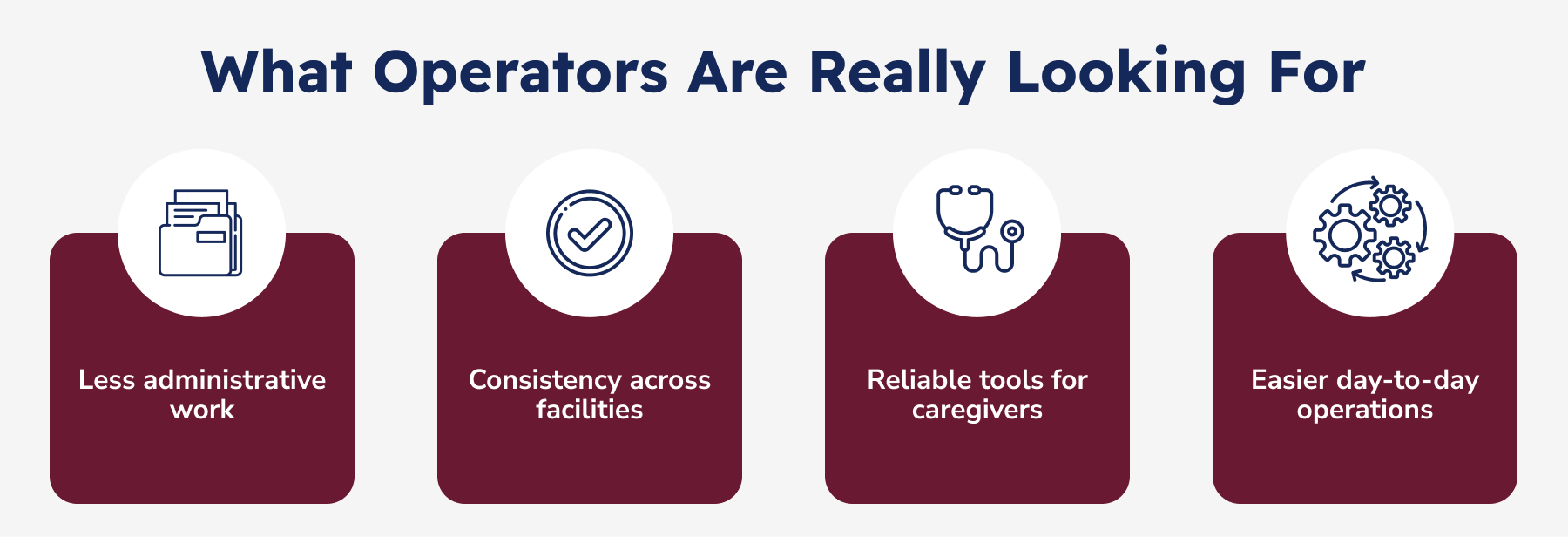
Today, operators are looking for programs that:
- Cut down on administrative work so teams aren’t buried in paperwork and follow-ups
- Create consistency across facilities, instead of everyone doing things a different way
- Give caregivers reliable tools, not products that slow them down or create workarounds
- Make operations easier to manage, not harder to explain
When Ancillary Program Solutions align with how an organization really runs, they stop feeling like “one more thing” and start acting like built-in support.
Why This Rethink Matters Now
Healthcare operations are only getting more complex. Doing nothing is no longer a neutral choice.
Rethinking Ancillary Program Solutions gives healthcare operators the opportunity to:
- Identify inefficiencies before they become problems
- Strengthen vendor relationships
- Improve visibility into spend and performance
- Build a more sustainable operational model
It’s not about changing everything overnight. It’s about making intentional improvements that support both care teams and the bottom line. Click here to learn how Prime Services can help you get access to ancillary program solutions that fit your operations needs.
FAQs: Ancillary Program Solutions
What are Ancillary Program Solutions in healthcare?
Ancillary Program Solutions refer to contracted programs and services that support healthcare operations outside of direct clinical care, such as pharmacy programs, supplies, and facility services.
Why are healthcare operators reevaluating their ancillary programs?
Rising costs, vendor complexity, and limited visibility into pricing and performance are pushing operators to take a more strategic approach to ancillary programs.
How do Ancillary Program Solutions impact quality of care?
When programs are reliable and well-managed, caregivers spend less time navigating issues and more time focused on residents and patients.
Are Ancillary Program Solutions only about reducing costs?
No. While cost control is important, these programs also improve operational efficiency, consistency, and long-term sustainability.
What’s the first step in improving Ancillary Program Solutions?
Many organizations start by reviewing current programs, identifying gaps, and partnering with experts who understand healthcare operations and regulatory requirements. A good first step is to start with stronger procurement.